Google Changed Real Estate Search — Most Agents Haven’t Realized It Yet
Google Changed Real Estate Search — Most Agents Haven’t Realized It Yet
Why MLS Syndication Alone May No Longer Be Enough
For years, most real estate agents followed the same listing strategy:
Upload the property to MLS.
Add photos.
Wait for syndication traffic.
That system worked for a long time.
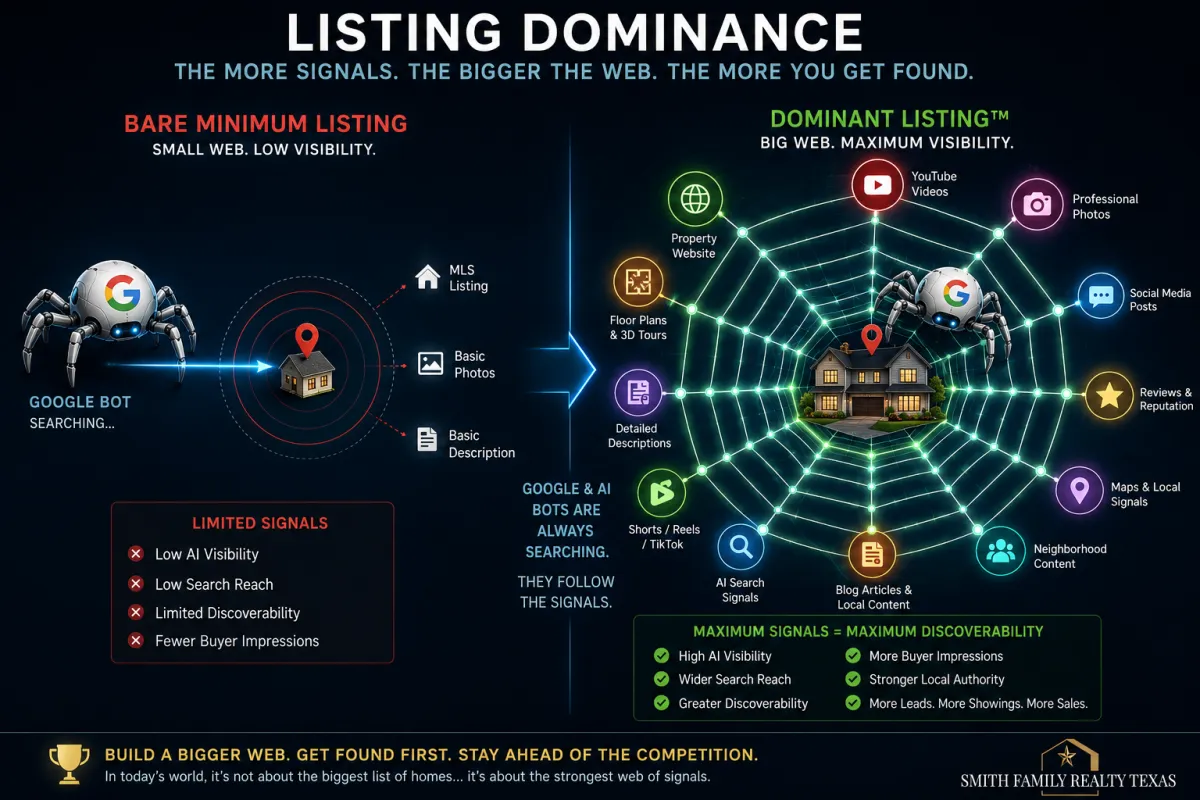
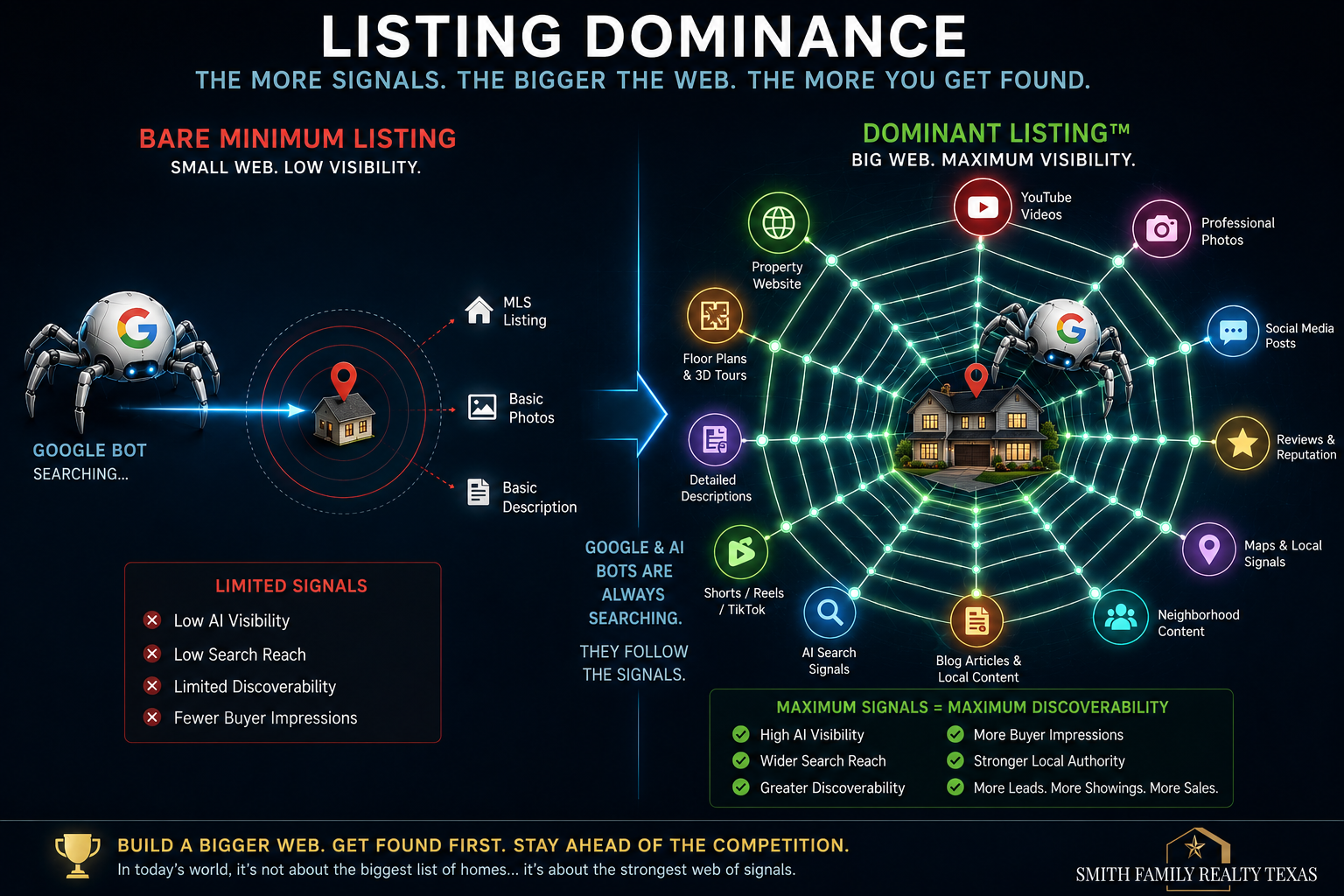
But the way buyers discover homes online is changing rapidly — and many agents are still operating under older assumptions about how listing visibility actually works.
Buyers Don’t Search Like They Used To
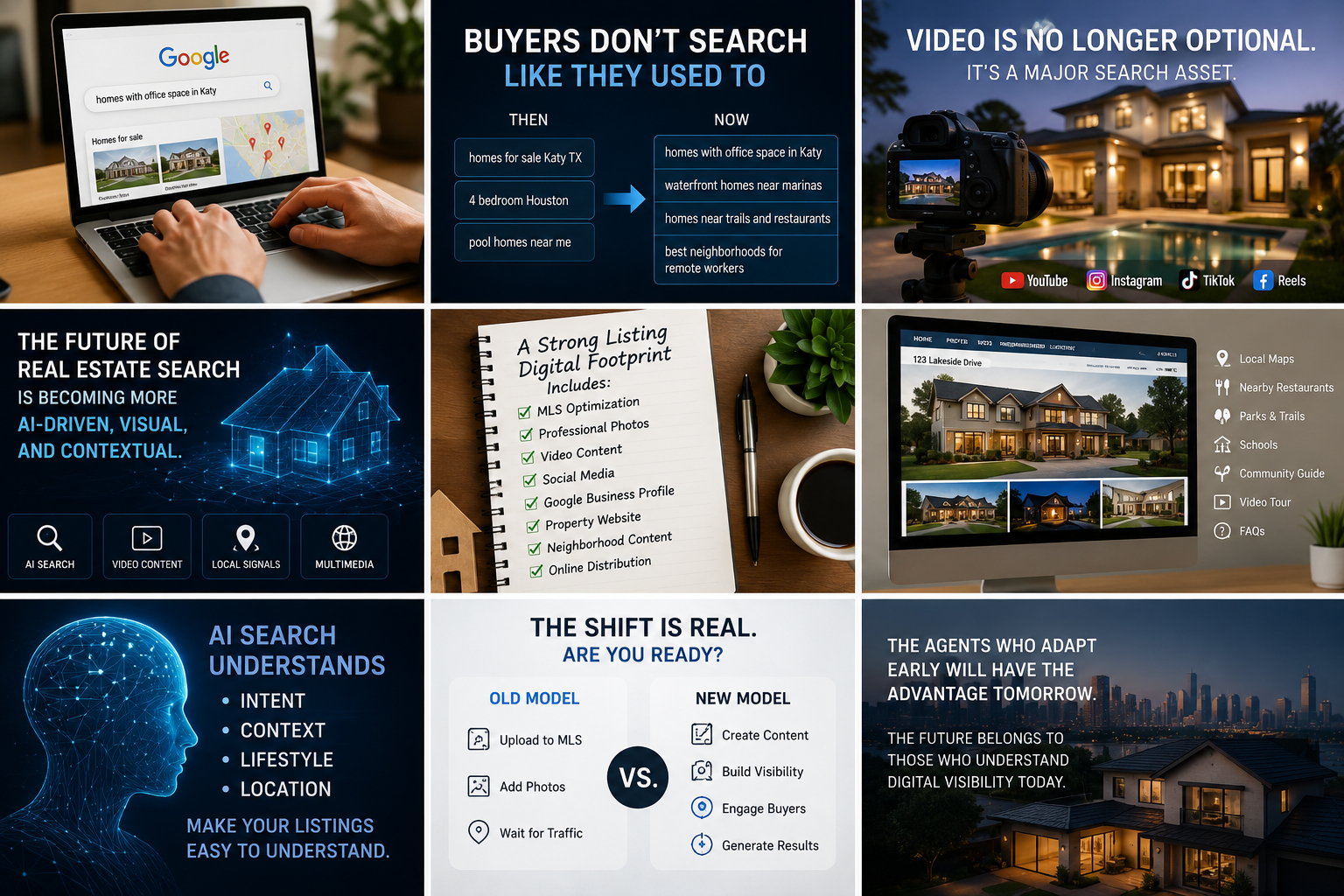
A few years ago, buyers searched in short phrases:
“homes for sale Katy TX”
“4 bedroom Houston”
“pool homes near me”
Now search behavior is becoming far more conversational.
People are asking:
“homes with office space in Katy”
“waterfront homes near marinas”
“homes near trails and restaurants”
“best neighborhoods for remote workers”
“homes with outdoor entertaining space”
Google and AI systems are increasingly trying to understand:
context,
lifestyle,
buyer intent,
and geographic relationships.
That changes how listings get discovered.
The Industry Is Quietly Shifting
Google has continued testing real estate listings directly inside search results.
At the same time:
YouTube,
short-form video,
AI search,
local authority signals,
and multimedia content
are becoming more connected to how properties gain visibility online.
The old model was heavily centered around portal traffic.
The emerging model looks much more like:
distributed digital visibility.
Meaning:
the listings that gain the most traction may increasingly be the ones surrounded by:
video,
social content,
neighborhood information,
Google Business activity,
property websites,
and stronger digital footprints.
Most Listings Are Still Thin
Many listings today still consist of:
basic remarks,
standard photos,
and minimal marketing.
The problem is:
thin listings create very little digital relevance.
Modern search systems increasingly reward:
depth,
context,
engagement,
and repeated digital signals.
That means:
better captions,
stronger visuals,
video content,
neighborhood references,
and broader distribution
may matter far more moving forward than many agents realize.
Video Is Becoming a Major Search Asset
YouTube is one of the largest search engines in the world.
And Google owns it.
That matters.
Short-form video platforms like:
YouTube Shorts,
Instagram Reels,
TikTok,
and Facebook Reels
are increasingly influencing how buyers discover:
homes,
neighborhoods,
communities,
and agents.
Many buyers now see a property on video before they ever click a listing portal.
Property Websites Are Becoming Relevant Again
Single-property websites are quietly becoming valuable again — especially when they include:
local maps,
nearby restaurants,
parks,
trails,
schools,
FAQs,
neighborhood guides,
and video.
Why?
Because modern AI systems increasingly reward:
contextual relevance.
The stronger the digital ecosystem surrounding a property:
the stronger the discoverability potential becomes.
The Future Agent May Need To Think Differently
The industry may be moving toward a future where agents are no longer simply:
“listing homes on MLS.”
The agents who adapt early may increasingly become:
digital visibility strategists.
Understanding:
AI search behavior,
local authority,
video discoverability,
conversational search,
and multimedia distribution
may become a significant competitive advantage over the next several years.
Most brokerages still are not seriously discussing these shifts yet.
But the agents paying attention now may position themselves very differently in the future.
What We’re Watching Closely at SFRT
At Smith Family Realty Texas, we’ve been actively studying how:
Google,
AI-driven search,
video platforms,
and digital distribution
are beginning to reshape listing marketing.
Not because we think MLS is disappearing.
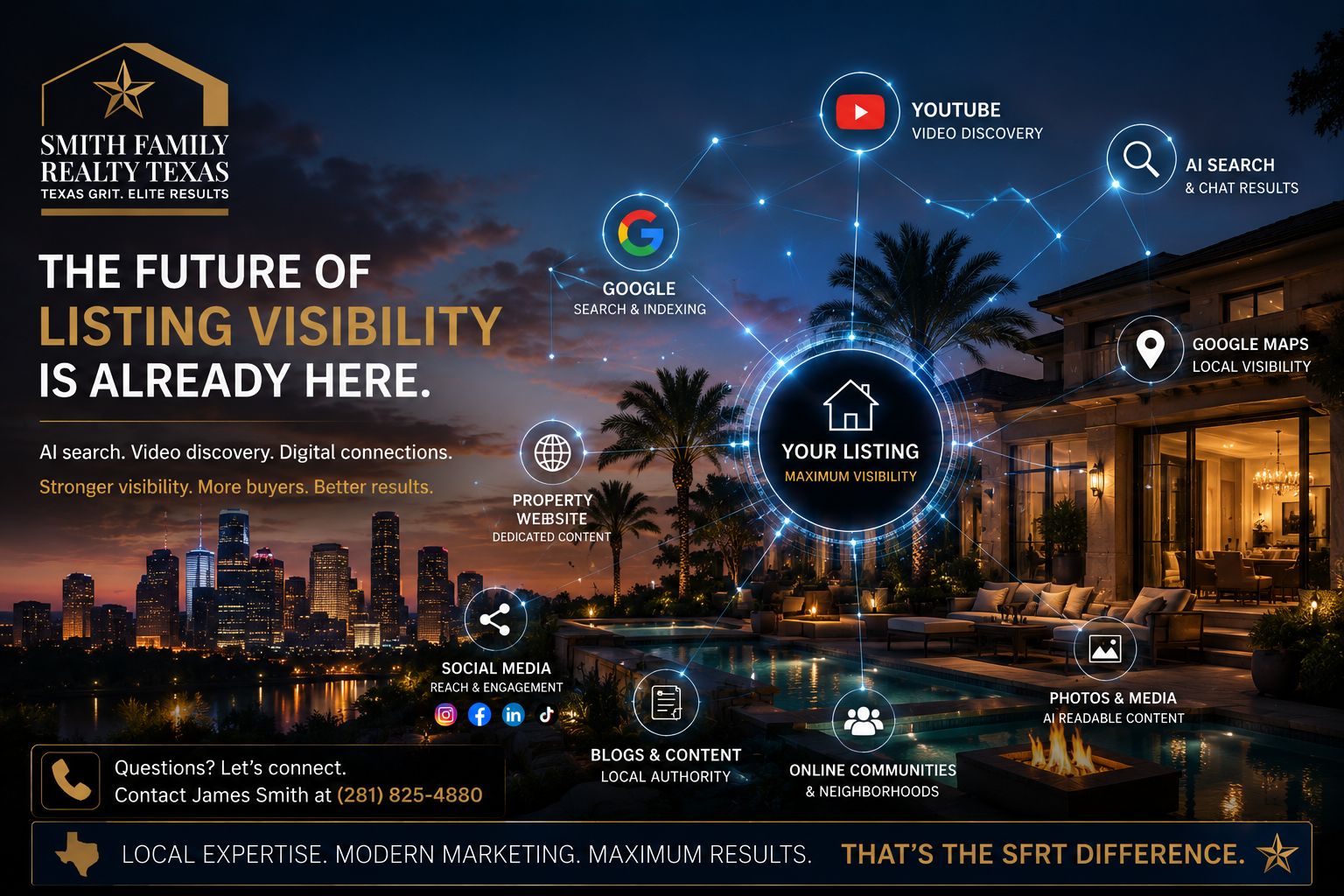
But because we believe the future of listing visibility is becoming much broader than MLS syndication alone.
The interesting part is:
this shift toward AI-driven discoverability may only be beginning.

If you have questions about modern listing visibility, AI search, or where real estate marketing may be heading next, feel free to contact James Smith at (281) 825-4880.


